Loading...
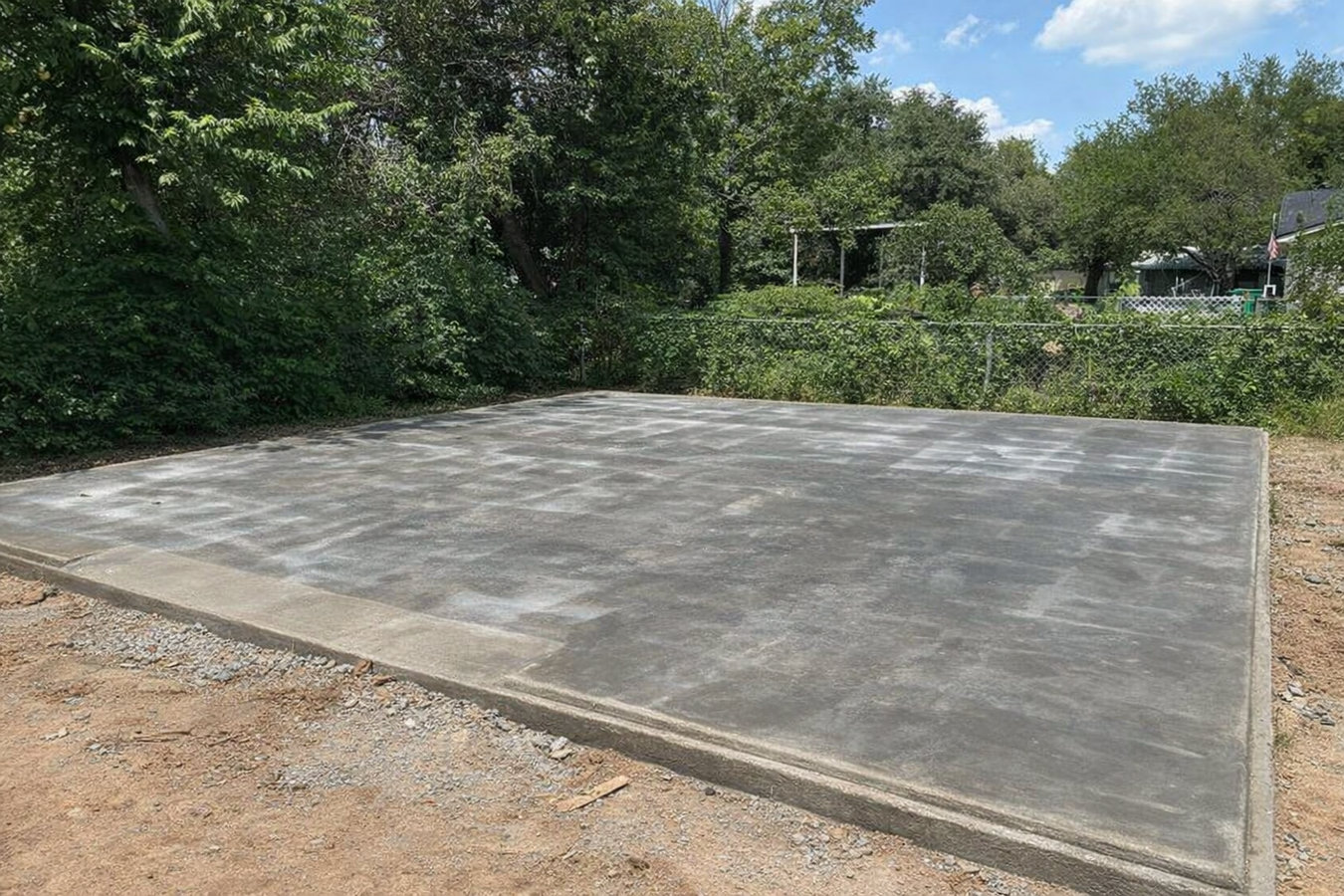
Brownsville's clay soil expands and shrinks with every rain cycle. A slab that is not engineered for local conditions will show cracks long before it should. We build reinforced concrete slabs with the beam depth, drainage grading, and curing care that South Texas actually requires.
Slab foundation building in Brownsville means pouring a single reinforced concrete layer directly on prepared ground - this becomes your floor and your structural base, with most residential projects taking one to two weeks from permit approval to a cured slab ready for framing.
Most homes in Brownsville sit on concrete slabs because the flat coastal plain and high water table make basements impractical. The challenge here is the clay soil underneath - it moves with every rain and dry spell, and a slab that is not designed for that movement will develop cracks within a few years. That is why the reinforced beams and proper site grading that a local contractor brings to the job matter more here than in most of Texas.
Many slab projects also involve work directly above or below grade. If your project calls for structural posts or column supports, that often pairs with foundation installation to make sure every load path is handled consistently from the ground up.
Hairline cracks in concrete are normal over time, but cracks wider than about a quarter inch - or cracks that run diagonally from the corners of doors and windows - suggest the slab has shifted. In Brownsville, this is often caused by clay soil expanding and contracting through wet and dry seasons. Waiting to address these patterns usually means more expensive repairs later.
When a slab shifts, the frame of the house shifts with it. If doors that used to swing freely now stick or will not latch, or if you can see daylight around window frames that used to fit tightly, the foundation may have moved. This is a common early warning sign in older Brownsville neighborhoods where the soil has had decades to work on the slab.
Brownsville gets heavy rain during tropical weather events, and water that sits against the foundation perimeter accelerates soil movement. If you see standing water within a few feet of your exterior walls after a storm, your drainage situation is putting stress on your foundation. If you are planning new construction, this signals the site needs grading work before the slab is poured.
The most straightforward sign is simply that you have a construction project that needs a foundation. If you are building a new home, a garage, a room addition, or a large covered structure in Brownsville, a poured concrete slab is almost certainly what your builder or architect will specify. Without it, there is nothing solid for the structure to rest on.
Residential slab construction in the Rio Grande Valley centers on slab-on-grade design - concrete poured directly onto compacted, graded soil with a plastic moisture barrier underneath. For most Brownsville homes, this means a slab at least four inches thick in the field area, with reinforced perimeter and interior beams that act as a skeleton keeping the whole slab from shifting as the clay beneath it moves through wet and dry cycles. The depth and spacing of those beams depends on your specific lot conditions, which is why a site visit before pricing matters.
Every project benefits from getting the foundation installation approach right from the start - and for projects that require column supports or isolated footings, concrete footings can be integrated into the same pour schedule to keep the project moving efficiently.
Suits new home construction on cleared lots - four-inch minimum thickness with reinforced perimeter beams sized for Rio Grande Valley soil conditions.
Suits properties with high clay content or drainage challenges, where extra beam depth and width provides additional resistance to soil movement.
Suits detached garages, workshops, or covered storage structures that need a flat, durable floor without the full load requirements of a home.
Suits room additions that need to connect structurally to an existing slab - requiring careful matching of elevation and reinforcement to prevent differential settling.
Brownsville sits on a coastal plain with heavy clay soil - a material that behaves more like a sponge than solid ground, expanding when it absorbs rain and contracting as it dries. Combine that with summer temperatures regularly above 95 degrees, the humidity coming off the Gulf, and Brownsville's proximity to the hurricane zone, and you have a set of conditions that genuinely demand different construction practices than most of Texas. A slab poured without accounting for those factors will start showing stress fractures within a few years, not decades. The Texas Windstorm Insurance Association sets specific construction standards for Cameron County homes, and the way your slab is anchored affects whether your finished structure qualifies for windstorm coverage.
Parts of Brownsville - especially neighborhoods near the resacas and lower-lying areas on the south side - have a relatively high water table. That means drainage planning before the pour is not optional. We work in San Benito and Los Fresnos as well, where the same clay soil and drainage conditions apply, and we bring the same site assessment approach to every project across the Valley.
We ask about your project and schedule a property visit - not a phone guess. You get a written estimate breaking down what is included so you can compare bids fairly. We reply within one business day.
We submit your building permit application to the City of Brownsville Development Services before any digging starts. Processing typically takes a few business days. We handle every piece of paperwork.
Once the permit clears, the crew grades the soil, compacts the base, and adds gravel or fill where needed for drainage. In Brownsville's clay soil, this step determines how well the finished slab holds up.
Concrete trucks arrive early to beat the South Texas heat. After the pour and surface finish, the slab cures for several days before framing begins. The city inspector signs off, and you get documentation that the work meets local standards.
We handle permits, inspections, and site prep - you get a written estimate before any work begins.
(956) 505-5077We engineer slab beams with the depth and width that Rio Grande Valley soil conditions actually require. A slab spec from Central Texas will not hold up here - we have seen the results of slabs that were not built for local conditions, and we design accordingly from the start.
Cameron County homes need windstorm insurance, and your foundation affects your eligibility. We build slabs with the anchor bolt placement and edge reinforcement that windstorm standards call for - so coverage is not a problem when your home is finished. Ask us about this before work begins.
We pull every City of Brownsville building permit, schedule city inspections, and hand you a closed permit at the end. You get documented proof the foundation was built to local standards - something that matters at resale and for insurance claims. You never have to wonder whether the work is legal to build on.
Brownsville summers push fresh concrete to crack before it reaches full strength. We schedule pours for early morning, cover the slab, and keep it moist through the first critical days. Concrete poured in 95-degree heat needs active management, not just a crew walking away after the truck leaves. See guidance from the American Concrete Institute on hot-weather concreting.
Every one of these points comes back to one thing: a slab built for where it actually sits. Brownsville is not an average climate with average soil, and contractors who treat it that way produce work that reflects it. We have worked in this area long enough to know what local conditions demand.
Full foundation installation services for new builds and replacement projects throughout Brownsville and the Rio Grande Valley.
Learn MorePoured concrete footings that create a stable base for posts, columns, and structural loads attached to your slab.
Learn MorePermits, site prep, and scheduling are all handled on our end - call now or request a free written estimate while your project dates are still open.