Loading...
Your foundation is the one part of your home you cannot fix easily once it is wrong. We install concrete foundations in Brownsville with proper site prep for clay soil, permits handled from start to finish, and a curing plan built around South Texas weather.
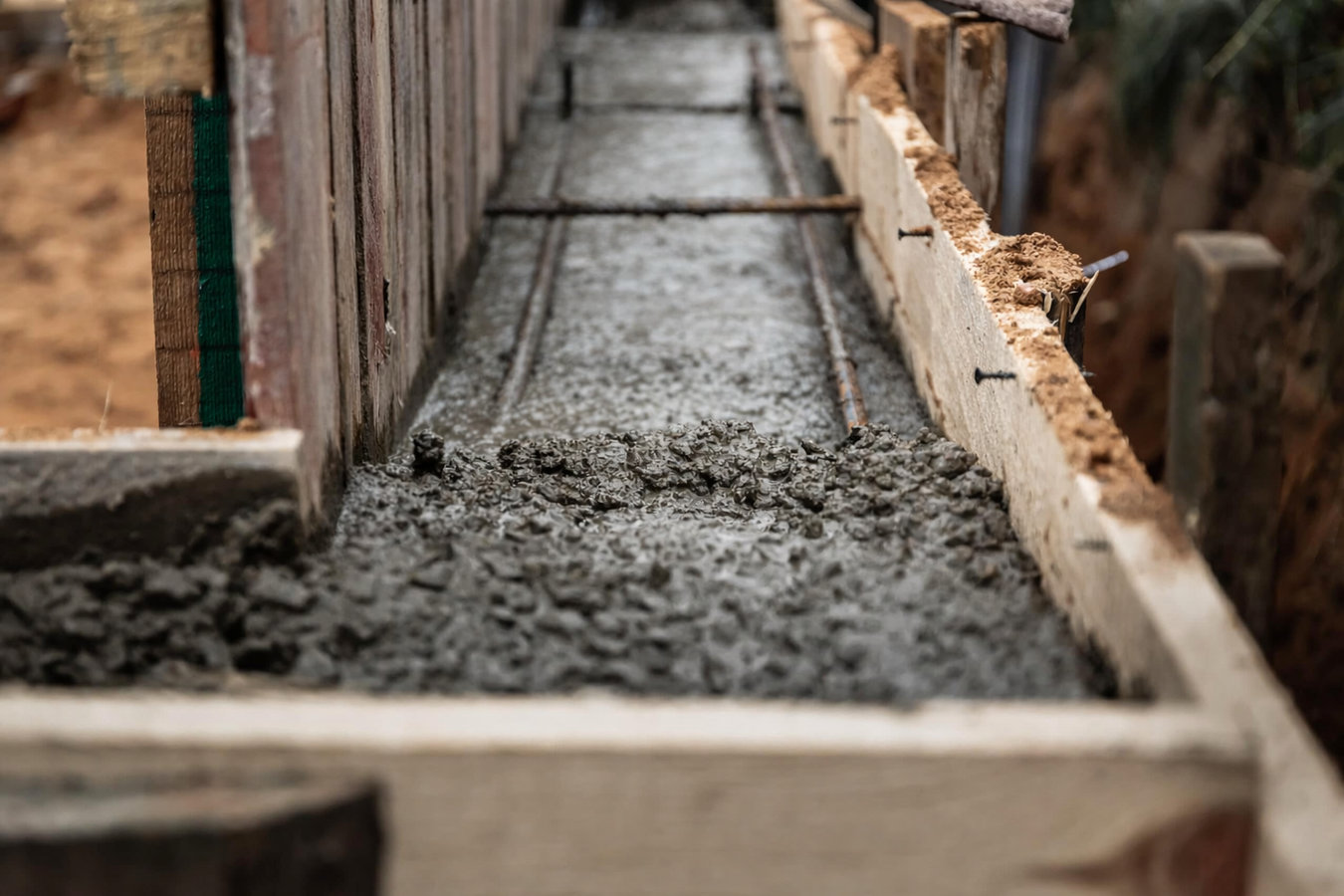
Foundation installation in Brownsville means clearing and grading the site, placing steel reinforcement and a moisture barrier, pouring a concrete slab, and curing it properly before framing begins - active work takes three to seven days, with a curing window of at least one week after the pour.
Nearly every home in Brownsville sits on a concrete slab rather than a crawl space or basement, because the flat coastal plain and shallow water table make below-grade construction impractical. What that means for homeowners here is that the slab is not just a floor - it is the structural base the entire house depends on. When the clay soil underneath it moves, everything above it moves too. A foundation that was not designed for local soil conditions will start showing that stress within a few years, not a few decades.
Foundation work connects directly to the structural pieces that sit on top of it. For homes with isolated column or post supports, pairing the slab installation with slab foundation building ensures both components are designed to work together from the ground up.
If doors in your home have started dragging on the floor or won't latch the way they used to, that is often one of the first signs the foundation beneath them has shifted. In Brownsville, this can happen gradually over years as the clay soil beneath the slab expands and contracts with the seasons - it is easy to dismiss at first, but it tends to get worse if the underlying cause is not addressed.
Hairline cracks in drywall are common and usually harmless, but diagonal cracks that start at the corner of a door or window frame and run toward the ceiling are a different story. These patterns often indicate that one part of your foundation has moved more than another - a condition that warrants a professional look before it progresses further.
Walk slowly through your home and pay attention to whether the floor feels level. In South Texas homes built on slabs, an uneven floor is often a sign that the slab itself has heaved or settled unevenly - something that is hard to see but easy to feel once you know what you are looking for. Left unaddressed, the unevenness typically worsens.
Brownsville gets heavy rain events, especially during hurricane season. If water consistently pools against your exterior walls rather than draining away, it is working against your foundation over time. Persistent moisture against a slab can erode the soil beneath it and accelerate the expansion-contraction cycle that causes cracking and settling.
Most Brownsville foundation installations are concrete slab-on-grade construction - the same approach used in virtually every home built in South Texas over the past 60 years. The core work is consistent: grade the lot so water drains away, compact the base, lay a moisture barrier and steel reinforcement grid, pour the concrete, and protect it during curing. What varies is the depth and spacing of the reinforced beams, which depends on your lot's specific soil and drainage conditions. A contractor who visits your property before quoting will design the foundation for what is actually under your feet.
For projects involving a full new home, the foundation installation and the slab foundation building work together as a single coordinated effort. If your project also includes a concrete surface for parking or vehicle access, our concrete parking lot building service can be scheduled as a follow-on to the foundation work.
Suits vacant lots and new build projects - full site assessment, grading, forming, reinforcement, and pour for homes, additions, or accessory structures.
Suits older Brownsville homes where the original slab has moved, cracked, or been compromised - requires careful site evaluation before any new concrete is placed.
Suits properties where soil erosion or water intrusion has undermined the existing foundation and a properly designed replacement is the right starting point.
Suits small commercial buildings, duplexes, and multi-unit residential projects that require heavier reinforcement specifications and larger pour coordination.
Brownsville's clay-heavy soil is one of the most demanding environments a concrete foundation can sit in. It swells when it absorbs rain and contracts as it dries - a cycle that runs year-round in a city that averages 27 inches of rain and then bakes under summer heat that pushes well above 95 degrees. On top of that, the city is in an active hurricane zone. Heavy rain during or right after a concrete pour can wash away the surface finish and weaken the concrete before it sets. Experienced local contractors schedule major pours in the late winter or early spring when possible, and build weather contingency into summer projects. The Texas A&M AgriLife Extension has documented the soil expansion challenges specific to South Texas coastal plain soils.
Brownsville's older neighborhoods - those developed in the mid-20th century near historic downtown - have homes approaching or past 50 years old. Many of those slabs are showing the cumulative effects of decades of soil movement. We work on foundation projects across the city, from established neighborhoods to newer subdivisions, and we also serve homeowners in Harlingen and San Benito where the same soil conditions and drainage challenges apply throughout Cameron County.
We ask basic questions about your project and schedule a property visit. A reputable contractor comes to your lot before giving you a number - the grade, soil, and drainage all affect cost and approach. We reply within one business day.
We pull the building permit from the City of Brownsville Development Services. This takes a few days to a couple of weeks depending on city workload. The permit means a city inspector reviews the work at key stages - a protection for you, not just a formality.
The crew clears and grades the soil, compacts the base, and lays a plastic moisture barrier. In Brownsville's clay-heavy ground, this preparation phase is critical - it is what gives the concrete a stable, consistent surface to rest on.
Concrete arrives and the crew places, levels, and finishes the slab - usually in one day for a standard home. The concrete cures for at least a week before framing begins. A city final inspection closes the permit and gives you a documented record the work was completed to code.
We come to your lot before quoting and handle every permit - you get a written estimate with no surprises.
(956) 505-5077We look at your lot in person before giving you a number. The grade, drainage, and soil conditions on your specific property affect what the job costs and how it should be designed. A phone quote without a site visit is a rough guess - not what you should be making decisions from.
We prepare the ground the right way for Rio Grande Valley conditions - proper compaction, drainage-focused grading, and moisture barrier placement. Skipping these steps to save money upfront almost always costs more in foundation repairs within a few years. We have seen it enough times to take it seriously on every job.
We pull the permit, schedule inspections, and hand you a closed permit at the end of the project. That documented record proves the work met local code - it protects you at resale and matters for any future insurance claim. You never have to chase paperwork or wonder whether the foundation is legally approved to build on.
One of the most common concerns homeowners have is a low quote that grows once work starts. We explain the variables before the contract is signed, put everything in writing, and do not start work until you understand what is included. The National Association of Home Builders recommends written contracts as the baseline standard for any residential construction project.
Foundation installation done right the first time is always less expensive than fixing one done wrong. Every decision we make before and during the pour - grading, reinforcement depth, curing care, permit compliance - comes from working in Brownsville and the Valley long enough to know what actually matters here.
Extend your project with a concrete parking surface engineered for the same local soil and drainage conditions as your foundation.
Learn MoreFocused slab-on-grade construction for new homes, additions, and accessory structures throughout Brownsville and the Valley.
Learn MoreBrownsville's building season fills fast - call now or request a free on-site estimate before your project dates close.