Loading...
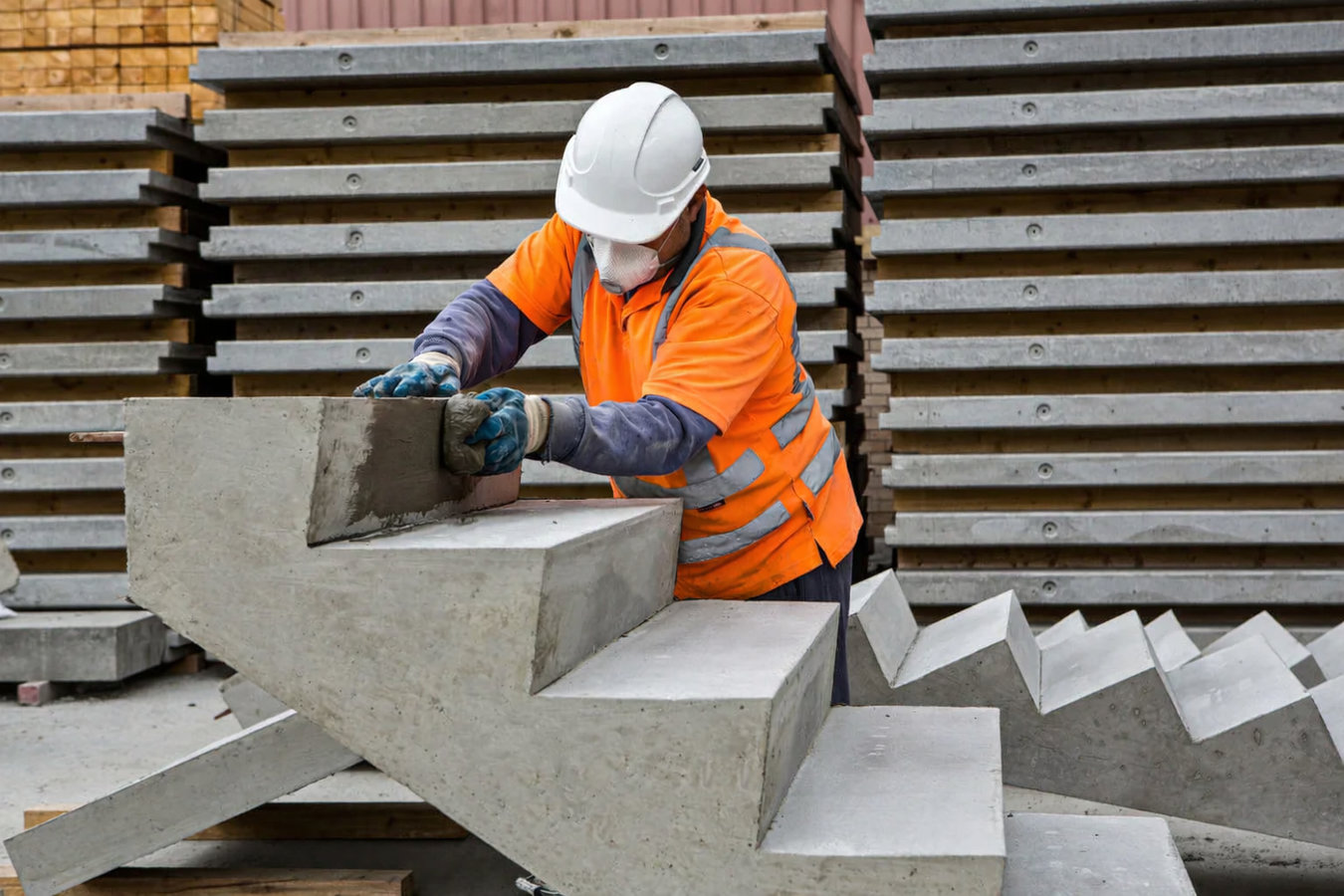
Crumbling, shifting, or cracked entry steps are a hazard for everyone who walks through your door. We build concrete steps that hold their shape through Brownsville's clay soil movement and Gulf humidity, with proper permits and a base built for local conditions.
Concrete steps construction in Brownsville typically runs $1,200 to $3,500 for a standard front-entry set, with most projects taking one to two days of active work plus curing time before the entry can be used again.
Many Brownsville homes were built in the 1960s through 1980s, and if your home falls into that era, there is a good chance the original steps have reached the end of their useful life. The combination of clay soil movement, tropical storm moisture, and Gulf humidity puts steady pressure on older concrete from below and outside. The result is usually cracking, settling, or spalling that starts at the edges and spreads inward.
New entry steps connect naturally to a broader entry update. Many homeowners combine this work with concrete sidewalk building to give the whole front approach a clean, matched finish at the same time.
Small hairline cracks are normal over time, but when cracks are wide enough to catch your finger or are growing longer each season, the structural integrity of your steps is compromised. In Brownsville's clay soil, these cracks often start at the edges and work inward as the ground shifts. Once cracks reach that size, replacement is generally the more reliable solution.
If any step wobbles when you step on it, or if the staircase is tilting forward or to one side, the base underneath has likely shifted. This is especially common in Brownsville because of the expansive clay soil that moves with moisture changes. Uneven steps are also a fall hazard that is worth addressing quickly.
When the surface of concrete starts to flake off in chunks - especially along the edges and corners of each step - that is called spalling. In Brownsville's humid, salt-air environment near the Gulf, moisture works its way into the concrete and weakens it from the inside. Once the surface starts breaking apart, the damage tends to accelerate.
Steps should be built with a slight slope so water runs off rather than sitting on the surface. If you notice puddles forming on your steps after rain - which Brownsville gets plenty of during tropical storm season - it means either the original slope was wrong or the steps have shifted. Standing water speeds up surface damage and makes steps slippery.
Most residential entry projects are straightforward: a set of two to six risers poured in place with a broom or textured finish for grip. But the details matter. The finish you choose affects both safety and appearance - a broom finish is practical and durable, while a stamped finish gives you a more polished entry that still grips wet feet. Handrails can be anchored directly into the concrete during the pour, which gives them a much stronger hold than adding them after the fact - and in Brownsville, they are required once a staircase reaches a certain height under city building standards.
If your old steps are attached to a slab or foundation that shows signs of movement, it is worth checking the slab before new concrete goes in. This project connects naturally with slab foundation building if any foundation repairs are needed at the same time.
Suits homeowners who need a durable, slip-resistant front entry at the most straightforward price point.
Suits homeowners who want a decorative look - stone, slate, or brick patterns - without the cost of natural materials.
Suits homeowners with mobility considerations or entrances tall enough to require a railing under Brownsville building standards.
Suits homeowners with deteriorating original steps that need full removal before a new set can be built.
Brownsville's clay-heavy soil - what soil scientists call Vertisol - expands when wet and contracts when dry. Under a concrete step, that means constant upward and lateral pressure through every wet season. A contractor who understands this builds the base to absorb that movement: compacting the soil, adding a gravel layer, and sizing the form so the step sits stable rather than on bare clay. Getting that base preparation right is the single biggest factor in whether your steps hold their shape for decades or start cracking within a few years.
The heat factor matters too. Brownsville summers regularly push past 95 degrees, and fresh concrete that dries too fast in that sun develops surface cracks before it ever fully hardens. We schedule pours for early morning and use moisture-retention techniques during curing - the same approach recommended by the American Concrete Institute for hot-weather concrete work. We work across the area, including older neighborhoods near San Benito and established communities in Harlingen, where the housing stock tends to have the oldest original steps.
We ask how many steps you need, whether existing steps need to come out, and what your entry looks like. We reply within one business day and schedule a free on-site visit to measure and quote accurately.
We check the ground condition, measure the height difference, and confirm the permit requirement with the City of Brownsville. A reputable contractor handles that paperwork for you - ask about handrail needs and finish options at this visit.
Old steps are broken up and hauled away. Then we compact the soil and add a gravel layer to create a stable base. In Brownsville's clay soil, this step matters - we do not rush it.
We build the form, pour early in the morning to avoid afternoon heat, and finish the surface to your chosen texture. The concrete needs 24 to 48 hours before you can walk on it, and continues to strengthen for several weeks after.
We handle the city permit, prepare the base for local soil conditions, and give you a written quote before any work starts. Call us or send a message - we reply within one business day.
(956) 505-5077We schedule pours for early morning in Brownsville's summer heat and use covering techniques to keep fresh concrete from drying too fast. Rushing a pour in 95-degree heat causes surface cracking - we account for that before we show up.
We pull the required building permit for every set of steps attached to your home. The city inspection that follows is a check on our work - and it protects you if you ever sell or file an insurance claim.
We compact the ground and lay a gravel base before the form goes in. Brownsville's Vertisol clay shifts with every rain cycle, and proper base preparation is what keeps your new steps from cracking and tilting within a few years of installation.
We have built entry steps throughout Brownsville and surrounding communities. We can point you to finished jobs in your area - a contractor who has worked in Brownsville long enough understands local soil and climate in ways that a general crew does not.
Every set of steps we build gets the same base preparation, the same permit process, and the same hot-weather pour protocol - whether you are in an older downtown neighborhood or a newer subdivision on the north side of town. We put the scope and timeline in writing before any work begins.
Our work follows standards set by the American Concrete Institute and the Portland Cement Association, including ACI 305 hot-weather concreting guidelines.
If your entry steps are failing, check the condition of your slab foundation before the new concrete goes in.
Learn MoreConnect your new entry steps to a properly graded sidewalk that directs water away from your home.
Learn MoreSpots fill up before storm season - lock in your project date now and we will handle the permit paperwork for you.